Is Charcoal Grilling Bad for You?
People ask us this at trade shows and in sourcing calls more than any other question about our product. Is charcoal grilling bad for you, and if it is, how bad, and does the charcoal itself carry the blame? We fire kilns for a living, so we will answer it the way we understand it: from the fuel side, honestly, without selling you a story. The short version is that grilling over charcoal carries some real risks, most of them tied to how the meat is cooked rather than to the charcoal, and that the grade and cleanliness of the fuel you buy changes the picture more than most buyers expect. If you distribute charcoal or put it under your own label, your customers will ask you the same thing, so it pays to know the facts.
This article is written for importers, distributors, restaurant buyers, and private-label brands. We will walk through what actually forms during a charcoal cook, which parts of the worry are earned and which are inherited from bad fuel, and what any of this means for the orders you place. If you want the product overview first, our hub page at /bbq-charcoal lays out the ranges we make and who each one suits.
What Actually Happens When You Grill Over Charcoal
Two things form when you cook meat over live coals, and they are the root of almost every health concern attached to the practice.
The first is polycyclic aromatic hydrocarbons, usually shortened to PAHs. These form when fat and juices drip onto hot coals, flare up, and send smoke back onto the food. The smoke carries the PAHs and deposits them on the surface of whatever you are cooking. This is a smoke and flare-up problem, not strictly a charcoal problem, but the fuel matters because a fuel that spits, sparks, or releases its own smoke adds to the load.
The second is heterocyclic amines, or HCAs. These form inside the meat itself when muscle protein, sugars, and creatine are heated to high temperatures for a long time. Charcoal gets hot and holds heat, so it creates good conditions for HCAs if the cook is careless. Again, the charcoal sets the stage, but the meat and the method write the script.
Both compounds have been studied for decades. In laboratory conditions, several PAHs and HCAs are classified as probable carcinogens. That is the fact that sits under the question. It is a real fact and we will not wave it away. What matters for a buyer is that the quantity formed on a plate of food depends heavily on technique and fuel quality, and both of those are things you can influence. If you want to understand why charcoal reaches the temperatures it does in the first place, we cover that in /blog/why-charcoal-burns-hotter-than-wood.
Is Charcoal Grilling Bad For You, Honestly Assessed
So, is charcoal grilling bad for you in a way that should change what you buy or sell? Here is the measured answer, broken into the parts that actually carry weight.
The risk is real but it is dose dependent. Eating charred, heavily smoked meat often, over years, is where the concern lives. An occasional cook over clean coals is a small exposure. The science points at frequency and char, not at the simple act of grilling.
The charcoal you choose changes the exposure. A clean hardwood lump or binchotan burns with almost no smoke once it is lit and ashed over. A cheap briquette loaded with binders, accelerants, and filler can release its own fumes while it burns. If a buyer is worried about what comes off the fuel, the grade of charcoal is the first lever to pull, and it is one you control at the purchasing stage. We go deeper on fuel composition in /blog/what-are-charcoal-briquettes-made-of.
The method does most of the work. High flare-ups, direct searing of fatty cuts for long periods, and letting food blacken are what push PAH and HCA levels up. Moderate heat, trimmed fat, no standing flames, and avoiding heavy char bring them down sharply. None of that requires exotic equipment.
Put those together and the honest position is this: charcoal grilling is not risk free, but the risk is manageable, and clean fuel plus sensible technique shrinks it to a level most people are comfortable with. When someone asks us is charcoal grilling bad for you, that is the answer we give, and it is the one you can repeat to your own customers without overstating anything.
Where The Fuel Itself Comes Into It
This is the part we know best, so we will spend time on it. Not all charcoal behaves the same under heat, and the differences matter for the smoke a cook produces.

Pure hardwood charcoal is wood that has been heated with little oxygen until the volatile compounds are driven off and what remains is mostly carbon. When it burns, there is very little left to smoke. A good lump will light, ash over, and then glow with a clean heat. Our page at /hardwood-charcoal explains the raw material and grades we run, and /blog/how-charcoal-is-made-forest-to-kiln shows the process that strips those volatiles out in the first place.
Binchotan, the Japanese-style white charcoal we also produce, is taken even further. It is fired at very high temperatures and comes out dense, hard, and almost pure carbon. It burns long, steady, and remarkably clean, with low smoke and a stable heat that is easy to control. That control is exactly what keeps flare-ups down, which is why so many restaurants cook over it. If binchotan is new to you, start with /blog/what-is-binchotan-charcoal and the overview at /binchotan-charcoal.
The problem fuels are at the bottom of the market. Low-grade briquettes can contain coal dust, sawdust, starch binders, and sometimes accelerants to make them light faster. Those additives can produce their own smoke and odour as they burn off, and that is smoke that was never part of the cook, landing on the food anyway. When people have a bad experience with charcoal fumes, a cheap briquette is often the real culprit. The charcoal got the blame; the filler earned it.
Moisture is the quiet factor. Damp charcoal smoulders instead of burning clean, and smouldering means more smoke. A fuel that arrives wet or absorbs humidity in storage will smoke more than the same fuel kept dry. We treat moisture as a quality metric, not an afterthought, and we explain why in /blog/charcoal-moisture-content-burn-quality. For a buyer, specifying moisture content in your contract is one of the simplest ways to keep smoke down across every bag you sell.
How Technique Changes The Answer
Because the method does so much of the work, it is worth knowing the handful of moves that bring the numbers down. Your customers will thank you for passing these on, and private-label brands often print a version of them on the bag.
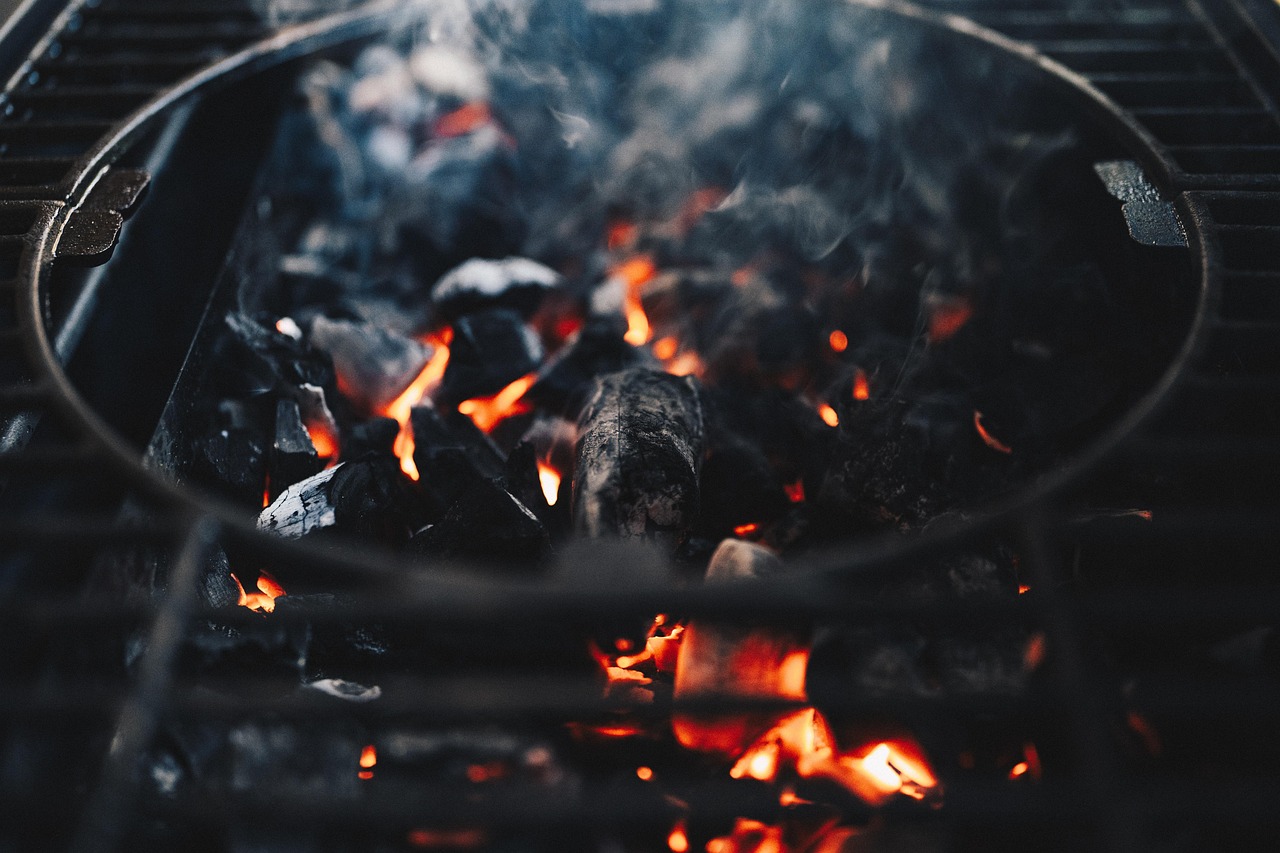
Keep the fat off the coals. Trim excess fat, and set up the grill so drippings do not fall straight onto live fuel. Many cooks use a two-zone fire, with coals on one side and the food able to move to the cooler side when a flare starts. Less dripping means fewer flares, which means less PAH-laden smoke.
Do not cook in the flames. Flames licking the food are the main source of surface deposits. Wait until the coals are ashed over and glowing, then cook over the heat, not the fire. Clean fuel makes this easier because it reaches that steady glowing stage and holds it.
Avoid heavy char. A little colour is flavour; a blackened crust is where HCAs concentrate. Cooking at moderate heat and turning food more often both reduce charring. Turning frequently has been shown to lower HCA formation because no single face of the meat sits at peak temperature for long.
Lower the overall temperature and time where you can. Very hot, very long cooks of protein-rich meat form the most HCAs. Lower and slower, or finishing thicker cuts with indirect heat, cuts that down. Our guide at /blog/how-to-choose-bbq-charcoal-low-and-slow covers fuel choice for that style, and beginners can start with /blog/charcoal-grilling-for-beginners.
None of these steps are difficult, and none of them need special gear. They are the difference between a cook that forms a lot of unwanted compounds and one that forms very little, over the exact same coals.
What This Means For Your Order
Here is where the health question turns into a purchasing question, which is the one that actually sits on your desk.

First, fuel grade is a health-adjacent spec, not just a performance spec. When you buy clean hardwood lump or binchotan instead of filler-heavy briquettes, you are buying lower smoke, fewer additives burning off, and a more controllable fire. If your customers are the kind who ask whether charcoal grilling is bad for them, the grade you stock is your first and best answer. Restaurant buyers in particular should look at /restaurant-charcoal, where control and clean burn are the whole point.
Second, consistency protects you. A fuel that burns the same way bag after bag lets your customers cook the same way every time, which keeps flare-ups and char predictable. Consistency comes from grading and quality control at the factory, not from luck. We screen for size, density, and moisture before anything ships, and we describe that process at /quality-control and in /blog/charcoal-quality-control-before-shipping.
Third, how you describe the product matters, especially for private-label brands. You can state truthfully that a pure hardwood or binchotan charcoal contains no additives and burns clean. You should not claim that grilling over it is entirely without risk, because that is not true of any grilling method and a careful buyer will know it. Honest copy ages better than a bold claim that a regulator or a well-read customer can pick apart. If you are building a brand, /blog/how-to-start-a-private-label-charcoal-brand and /private-label-charcoal walk through what you can and cannot say, and /oem-charcoal covers the manufacturing side.
Fourth, sourcing is part of the story your customers increasingly care about. Clean fuel and responsible sourcing tend to travel together, because a factory that controls its raw material also controls what ends up in the bag. Our approach is set out at /sustainability and /blog/sustainable-charcoal-responsible-sourcing.
So when you are placing an order, the health question quietly folds into the quality question. Specify grade, specify moisture, specify no fillers, and ask for the quality-control detail. A buyer who does that is already most of the way to a product they can stand behind.
The Difference Between A Trader And A Factory Here
One more point, because it bears directly on how confidently you can answer the health question. When you buy from a factory, you can ask exactly what the charcoal is made from and how it was processed, and get a straight answer backed by the kiln. When you buy from a trader who blends lots from several sources, that chain gets murky, and murky is where fillers and surprises hide. If you cannot say what is in the fuel, you cannot honestly tell a worried customer it burns clean. We lay out that distinction in /blog/charcoal-factory-vs-trading-company, and you can see our own operation at /factory and /manufacturing-process.
This is not a sales line so much as a practical one. The whole argument of this article is that clean fuel and good method keep the risk low. Both of those depend on knowing what you are burning. A factory relationship is how you know.
Recap
Is charcoal grilling bad for you? There is a real, dose-dependent risk, and it comes mainly from two compounds: PAHs from fat and smoke landing on the food, and HCAs that form in meat cooked hot and long. The charcoal sets the conditions but the method and the fuel grade decide how much actually forms. Clean hardwood lump or binchotan burns with little smoke and no additive fumes, while cheap filler-laden briquettes add smoke that was never part of the cook. Sensible technique, meaning no flare-ups, no cooking in flames, less char, and moderate heat, brings the numbers down sharply over the very same coals.
For a buyer, the health question is really a quality question. Specify grade, specify low moisture, specify no fillers, and insist on real quality control, and you will stock a product you can describe honestly and your customers can cook over with confidence.
To see the ranges we make and work out which one fits your market, start at our hub page: /bbq-charcoal.
Source it directly
BBQ Charcoal, factory direct.
Serious BBQ needs charcoal that holds temperature through a long cook without flooding the food in smoke. Our hardwood BBQ charcoal is built exactly for that.