What Is Yakitori? A Charcoal Producer's View
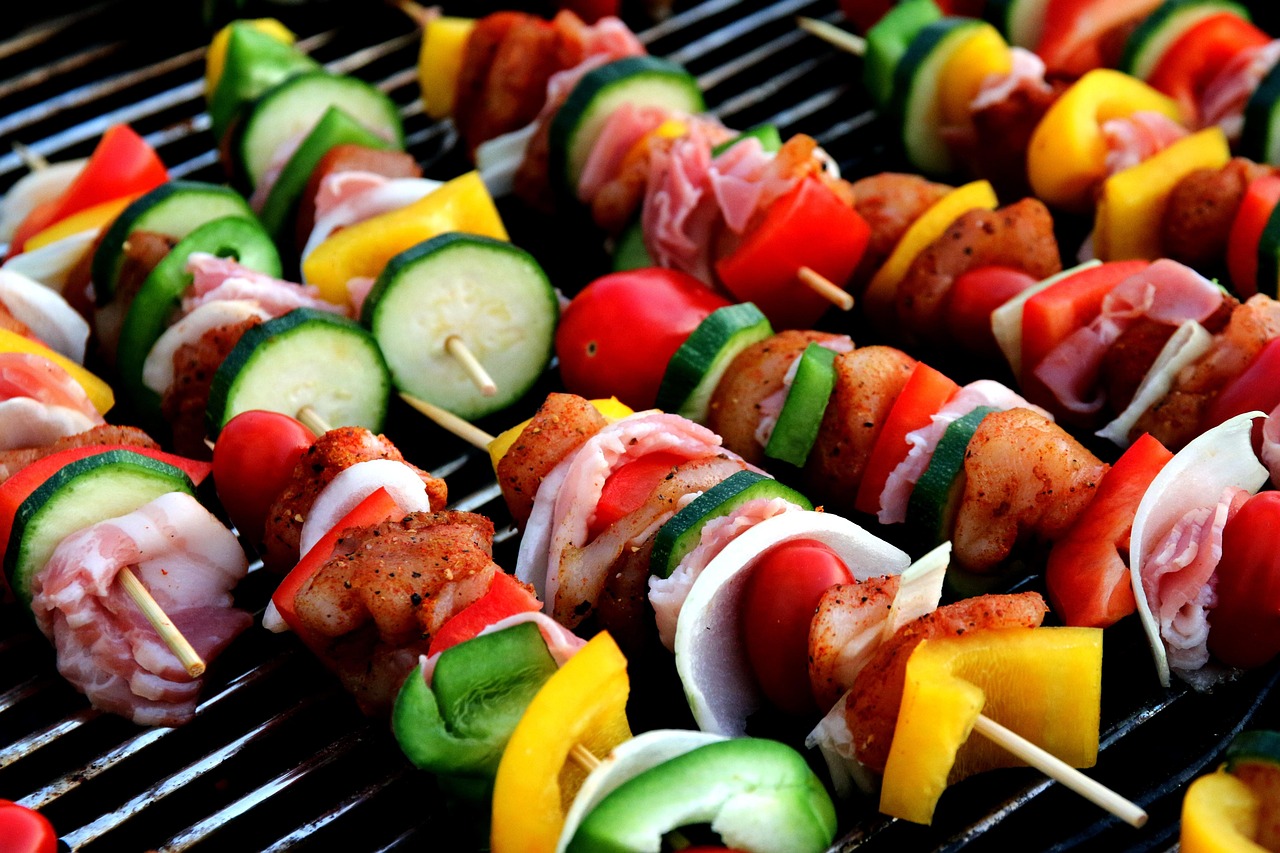
We make charcoal for a living, so when a buyer asks us what is yakitori, we answer from the fuel side first. Yakitori is Japanese skewered chicken, cut small, threaded onto bamboo or steel, and cooked over live coals until the fat renders and the surface takes on colour. The word breaks down plainly: yaki means grilled, tori means bird. That is the dish in two syllables. But the reason a buyer is asking us, a charcoal factory in Indonesia rather than a chef, is that the grill and the coal underneath the skewer decide whether yakitori tastes like a street snack or like something a guest pays a premium for. This article explains the dish as we see it from the kiln, and why the fuel matters more than most menus admit.
We ship to importers, distributors, and restaurant groups who run yakitori counters, so we have watched the same questions come up for years. People start with the food and end with the fuel. By the time a restaurant group has opened three locations, the owner knows more about coal than they ever expected to, because the coal is the one input that changes the plate every single service. So we will treat the dish seriously, then spend most of the words on the part we actually control.
What Is Yakitori, Step By Step
A yakitori cook does a small number of things, repeated with care. First, the chicken is broken down into parts, and here yakitori is more honest than most Western chicken cookery. Nothing is wasted. Thigh, breast, skin, liver, heart, gizzard, the soft cartilage, the tail, the oyster near the back, even the neck meat all go on separate skewers. Each part is a different texture and a different cooking speed, so they are never mixed on one stick. That separation is the first rule.
Second, the meat is cut to a size that cooks through before the outside burns. Pieces are small and even. A skewer of thigh might carry five or six cubes with folds of skin between them. Even sizing is not fussiness, it is physics. Live coal cooks from the outside in, and if one piece is twice the size of its neighbour, one is raw while the other is dry.
Third, the skewer goes over the coals. This is the step that defines the dish. The cook holds the skewer close to a bed of charcoal that is burning clean, with no flame and no smoke, just radiant heat coming off grey-white coals. The fat drips, and when it hits the coal it can flare. A good cook moves the skewer, turns it, and reads the surface. Salt yakitori, called shio, is seasoned with salt only. Tare yakitori is dipped in a soy-based sauce, often a house tare built up over years, and glazed in passes so the sugar caramelises without scorching.
Fourth, the skewer comes off at the moment the skin is crisp and the inside is just set. That window is narrow. It is measured in tens of seconds, not minutes. A cook running a busy counter is managing dozens of skewers at different stages, and the coal bed has to hold a steady output the whole time. That is where the fuel stops being a background detail and becomes the job.
So when someone asks what is yakitori in practical terms, the answer is: small, honest cuts of chicken cooked fast over clean, hot, steady coals, seasoned simply, pulled at the right second. The skill is real. The fuel is what lets the skill show up on the plate.
The Cuts And Why They Punish A Bad Fire
Different cuts expose different weaknesses in a coal bed, and this is worth understanding if you supply restaurants, because it explains the complaints you will eventually hear.
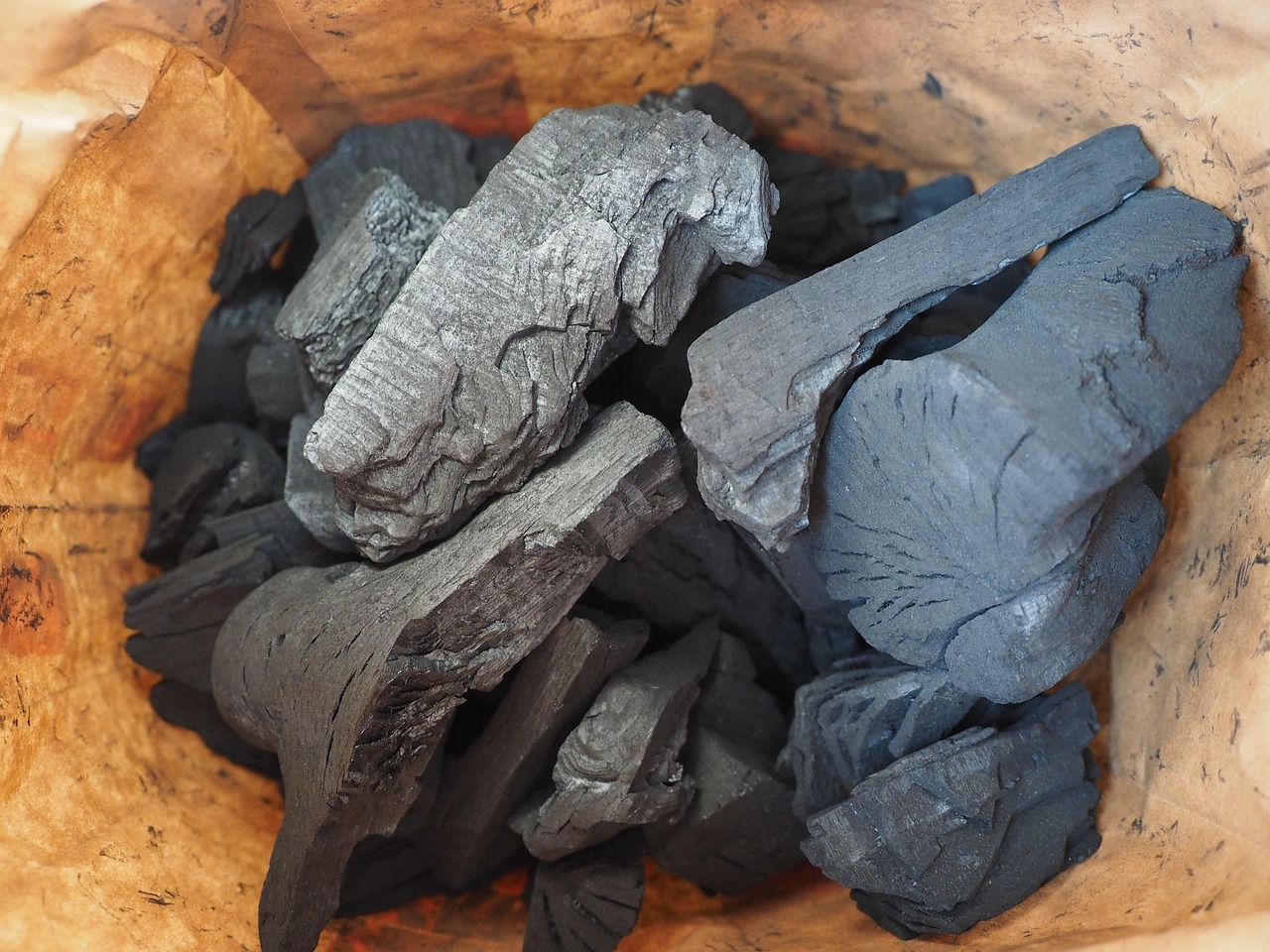
Skin, or kawa, is almost pure fat and connective tissue. It needs sustained, even heat to render slowly and crisp without flaring into flame. A coal that throws flame will blacken skin before the fat is gone. Liver and heart are delicate and cook in seconds, so they need a fire that is hot but controllable, where the cook can lift the skewer a centimetre and feel the heat drop. Thigh is forgiving. Breast, or sasami, is lean and dries out if the fire is slow, because slow cooking pulls moisture before the surface sets.
The pattern is simple. The harder cuts forgive a mediocre fire. The prized cuts do not. A restaurant that charges for its tsukune, its liver, its skin, is a restaurant that has already learned its coal must burn clean and hold a line. When buyers come to us after a few months of operation, it is usually the skin and the liver that sent them looking for better fuel.
Why The Charcoal Decides The Result
Here is the part we know best. A yakitori fire has three demands, and ordinary charcoal fails at least one of them.

It must burn clean. Yakitori is seasoned lightly, and the whole point is to taste chicken, salt, and a faint smoke. If the coal gives off harsh smoke, acrid fumes, or sparks, that flavour lands on the food. Cheap briquettes with binders and fillers carry their own smell, and that smell ends up on a skewer that was meant to taste of nothing but bird and fire. Clean burning is not a luxury here. It is the baseline.
It must burn hot and radiant. The cook wants heat coming off the coal as radiation, steady and strong, not as leaping flame. Flame chars the outside and leaves the inside raw, and it flares when fat drips. Radiant heat from a dense coal cooks evenly and lets the cook work close. This is a property of the raw material and the kiln. Dense hardwood, carbonised properly, gives that radiant output. Soft, fast wood does not.
It must last. A yakitori service can run for hours without a break. If the coal collapses to ash in forty minutes, the cook is rebuilding the fire mid-service, the heat output swings, and the skewers come off inconsistent. Long burn time is not about saving money on fuel, though it does that. It is about a stable fire from the first order to the last.
Those three demands are exactly what separates a commodity coal from a restaurant-grade coal. We wrote about the economics of that for buyers planning volume in our note on charcoal for restaurants and volume planning, because the cost conversation only makes sense once you understand what the fire has to do.
Binchotan And The Yakitori Grill
The coal most associated with yakitori is binchotan, a white charcoal made by carbonising dense hardwood at high temperature and then raking it out and smothering it in a mix of ash and earth. That finishing step is what makes it white charcoal rather than black. The surface takes on a pale, mineral coating, and the coal inside becomes extremely dense and hard. If you have ever heard two pieces of real binchotan ring like metal when tapped, that density is why.
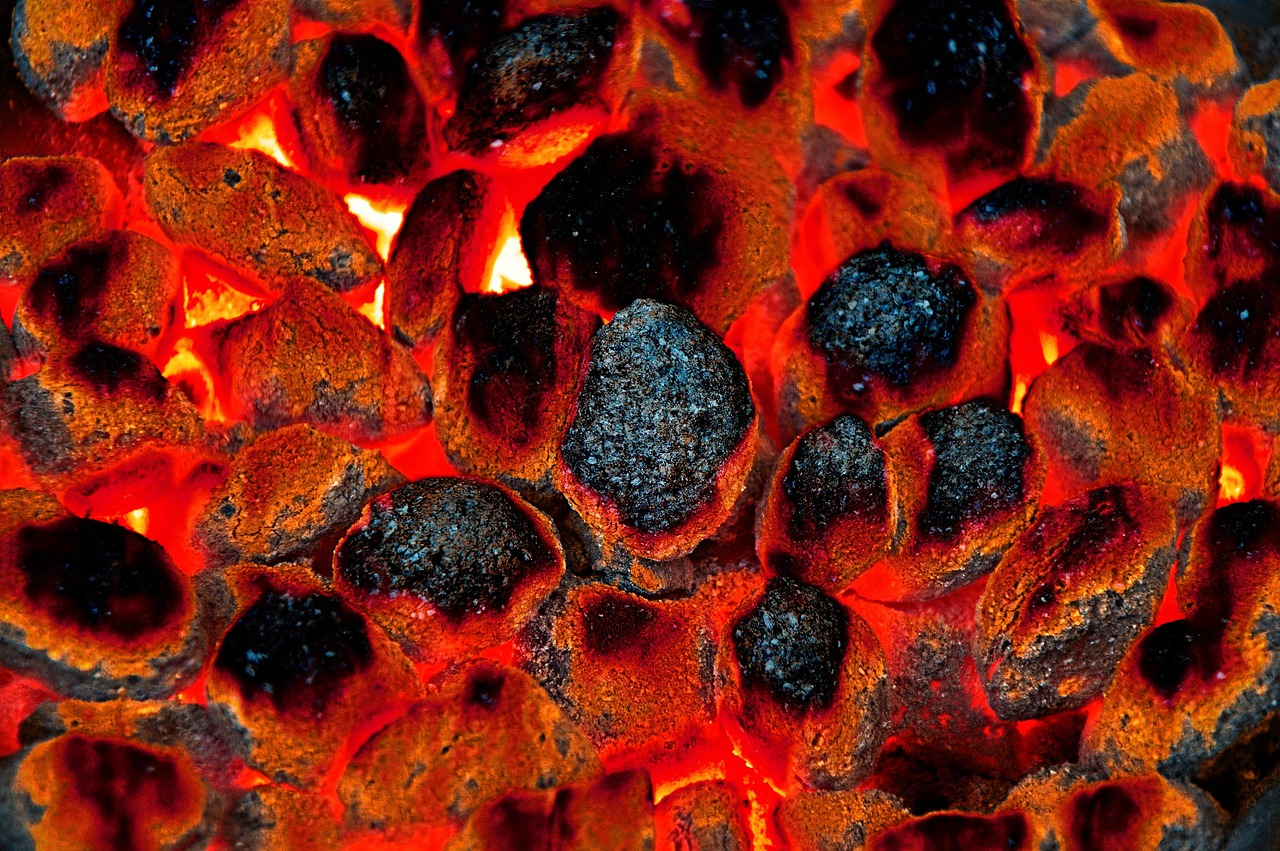
For yakitori, binchotan does the three things above about as well as any fuel can. It burns with almost no smoke once it is lit. It puts out strong, even radiant heat. And it lasts for hours, often outlasting a whole service on a single load with topping up. We go deeper into the material in our overview of binchotan charcoal and in the piece comparing white charcoal versus black charcoal, but the short version is that binchotan was effectively designed for exactly this kind of close, controlled, over-coal grilling.
The grill matters too. Yakitori is cooked on a long, narrow grill, often called a konro, built so skewers rest across the top with the meat over the coals and the bamboo handles safe over the edge. The channel is deep and narrow so the coal bed sits close to the food and the heat is concentrated. We walk through the fuel side of that setup in our guide to the yakitori grill and konro charcoal. The grill shape and the coal are a matched pair. A long, dense, slow coal suits a long, narrow grill that has to hold heat across a whole bank of skewers.
One caution we give every new buyer: binchotan is hard to light. It does not catch from a match or lighter fluid, and it should never be lit with fluid because the smell transfers. It is started on a separate burner or chimney and moved across once it is going. That is normal practice in a yakitori kitchen, but it surprises people the first time. We cover the method in how to light binchotan charcoal so your customers are not caught out on opening night.
What What Is Yakitori Means For Your Order
If you are buying charcoal to supply yakitori operators, the dish itself sets your specification. This is the practical turn in the question. Understanding what is yakitori tells you what to put in the container.
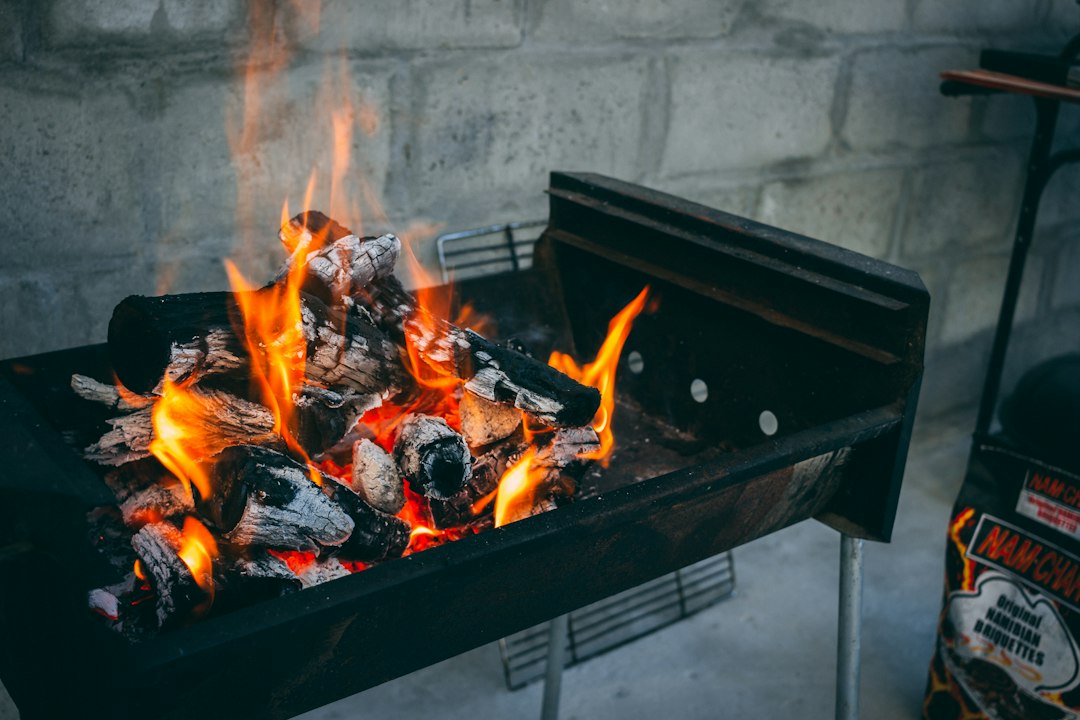
You want a dense hardwood charcoal, carbonised properly, with low smoke, high radiant output, and long burn time. For a counter that trades on its grill, that usually means binchotan or a high-grade hardwood lump that approaches the same behaviour. You want consistent piece size, because a cook building a tight coal bed in a narrow konro cannot work around wildly mixed lumps. You want low moisture, because damp charcoal spits, smokes, and burns cooler, and we explain that link in charcoal moisture content and burn quality. And you want consistency from shipment to shipment, because a restaurant that dials in its fire around one coal does not want to recalibrate every time a container lands.
That last point is where the factory relationship earns its keep. Grade stability across orders is a manufacturing discipline, not luck. It comes from controlling the wood species, the kiln, the carbonisation, and the sorting, then checking it before it ships. We treat that as the core of the business, and it is why we wrote about charcoal quality control before shipping. A yakitori buyer is buying repeatability as much as they are buying coal.
There is a demand side worth naming too. Yakitori counters and robata grills are a growing share of why restaurants come looking for binchotan in the first place. We laid out that demand in why restaurants use binchotan for yakitori and robata, and it holds across markets. Where a city gains Japanese grill restaurants, binchotan orders follow within a year or two. If you are a distributor deciding whether to carry a restaurant-grade line, that is the trend to watch.
Supplying A Yakitori Programme
From our side of the container, supplying this market is a specific job. The coal has to arrive intact, because binchotan that has shattered into fragments in transit is worth far less to a cook who needs whole pieces for the konro. That puts weight on packaging and handling, which we treat as part of the product rather than an afterthought. The coal has to be graded tightly, because a yakitori buyer is paying for the top of the range, not an average. And the paperwork and species documentation have to be clean, because restaurant-grade charcoal crosses borders under real scrutiny now.
For buyers who want to put their own name on a restaurant-grade line, this is a natural fit for private label, since the end customer cares about the grill performance and the brand story, not about who fired the kiln. That is a longer conversation, and it starts at our hub for restaurant buyers.
If you run or supply yakitori kitchens, the most useful next step is our restaurant charcoal hub, which gathers the grades, the burn data, and the ordering detail in one place. It is built for exactly the buyer who started with a food question and ended up specifying a fuel.
Recap
So, what is yakitori? It is Japanese skewered chicken, cut small and honest, cooked fast over clean, hot, steady coals, seasoned simply, and pulled at the right second. The cooking skill is real, but the coal is what lets that skill reach the plate. Yakitori demands a fuel that burns clean, radiates strong even heat, and lasts a whole service, which is why binchotan and high-grade hardwood charcoal are tied so closely to the dish. For a buyer, understanding the food is really a way of understanding the specification: dense, dry, consistent, low-smoke, long-burning coal, graded tightly and shipped the same way every time.
We answered the question from the kiln because that is the part we control, and it is the part that most often decides whether a yakitori counter succeeds. If you are sourcing coal for this trade, start at our restaurant charcoal hub and we will take it from the grade up.
Source it directly
Restaurant Grade Charcoal, factory direct.
In an open kitchen, charcoal is part of the dining room. It must burn clean, hold steady, and never impose on the food. This is the grade the world's grill counters run on.