Grilling Ribs on Charcoal: The Low and Slow Setup
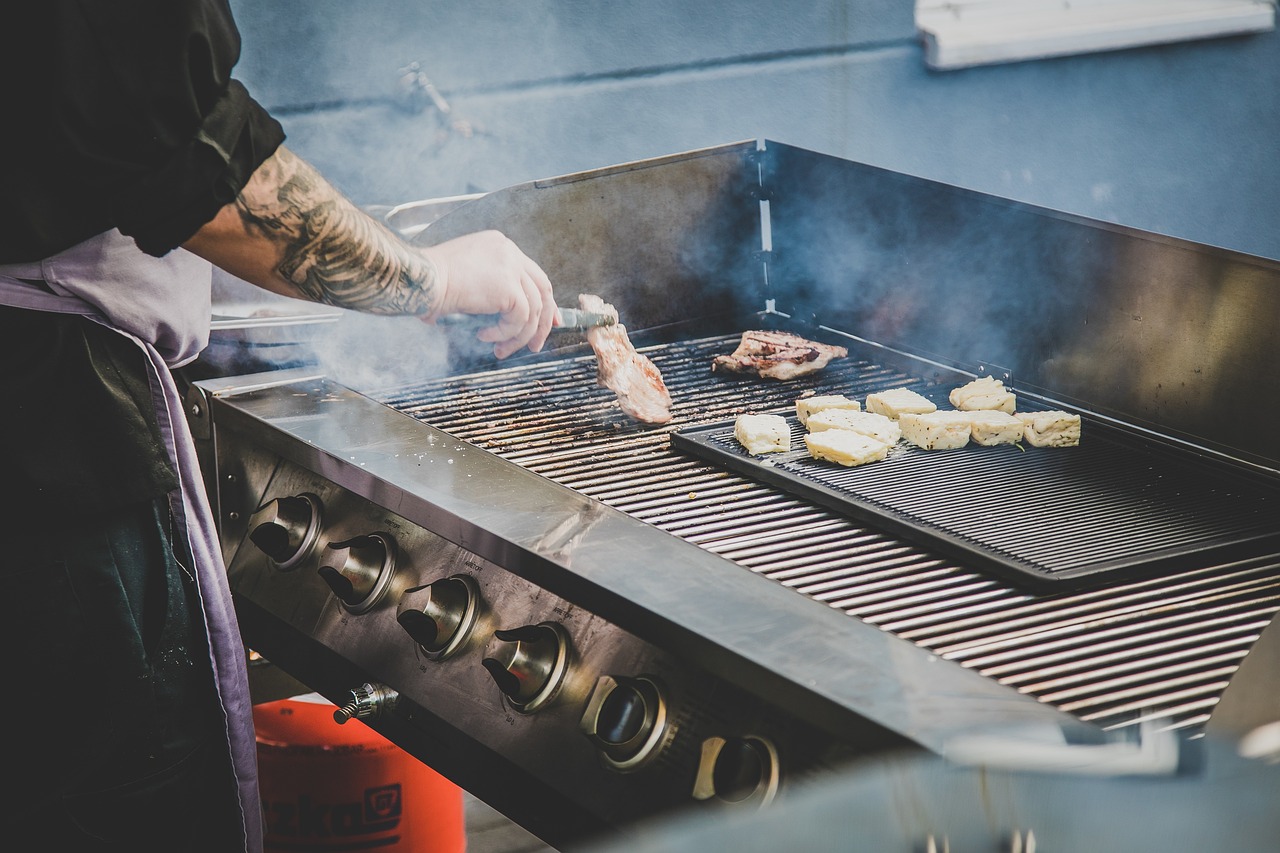
Grilling ribs on charcoal is not fast cooking. A rack of ribs holds connective tissue that only softens with hours of steady, gentle heat, so the whole job is about holding a low temperature for a long time without babysitting a dying fire. We fire kilns for a living and we export the fuel that ends up under those ribs, so we see the problem from the fuel side first. Most failed racks are not a seasoning problem or a technique problem. They are a fuel and airflow problem. If the charcoal spikes hot and then collapses in forty minutes, no amount of wrapping or spritzing will save the texture. This guide walks through the setup we would hand a buyer who asked how to do it properly.
The short version: pick a dense hardwood lump, build a two-zone fire, hold the grate between 110 and 135 degrees Celsius, and give yourself four to six hours depending on the cut. The long version is below, because every one of those numbers depends on the charcoal you started with.
Why Ribs Need A Different Fire
A steak wants a short, violent burst of heat. Ribs want the opposite. The meat between the bones is laced with collagen, and collagen does not respond to speed. It needs time at a temperature high enough to break down into gelatine but low enough that the muscle fibres do not seize and dry out. That window is narrow, and it sits far below where most people think of grilling.
Hold the cooking chamber too hot and the outside chars while the inside stays tough. Hold it too cool and the fat never renders, so the rack comes off greasy and rubbery. The target is a long plateau, not a peak. That single fact drives every decision about fuel. You are not asking the charcoal for maximum heat. You are asking it for stamina: a modest output held flat for hours, with enough mass left in the firebox at hour four to keep going.
This is why briquettes and lump behave so differently in a rib cook, and why the fuel choice is the first real decision, not an afterthought. If you want the wider comparison before you buy, our low and slow charcoal guide covers the trade-offs cut by cut.
The Fuel: What To Burn Under A Rack Of Ribs
For grilling ribs on charcoal you want density and consistency above all else. Density buys you burn time. A dense piece of hardwood lump holds more carbon in the same volume, so it releases heat slower and lasts longer than a light, airy piece that flares and fades. Consistency buys you a predictable fire, because a bag full of similar-sized, similar-density pieces burns at a rate you can read.

Here is how the common fuels sit for this specific job.
Hardwood lump charcoal
This is our default recommendation for ribs. Good hardwood lump charcoal lights cleanly, reaches temperature without heavy smoke, and burns with a steady output that suits a long cook. It is made from real wood with nothing added, so it will not push off-flavours into the meat over a four-hour session. The one thing to watch is grade. A bag with a wide spread of piece sizes burns unevenly, so a few large lumps smoulder while the small shards burn out early. We screen for size on export grades for exactly this reason. If you want to understand how grading affects a slow cook, our note on hardwood lump grades explains what the screen sizes mean in practice.
Binchotan and white charcoal
Binchotan is the longest-burning, cleanest fuel we make. It holds a low, even heat for hours with almost no smoke and almost no ash, which sounds perfect for ribs, and in a konro or a tight kamado it is. The caveat is that binchotan is a radiant-heat fuel built for cooking close over the coals, so it suits yakitori and direct work more than it suits a big indirect smoke. It is also harder to light and more expensive per cook. For ribs in a kettle or an offset, hardwood lump is the more practical choice. If your setup is a compact grill and you want that clean, odourless burn, read what binchotan charcoal is before you commit.
Briquettes
Briquettes give you a very stable, uniform burn because every piece is the same size and density by design. That uniformity is genuinely useful on a long cook. The trade-off is additives and ash. Lower-grade briquettes carry binders and fillers that can taint a long smoke and leave a heavy ash bed that chokes airflow by hour three. If you use them, use a clean, high-carbon briquette and plan to manage the ash. Our view on where they fit sits in hardwood charcoal versus briquettes.
Whatever you choose, moisture matters more than people expect. Damp charcoal fights you the whole way: it lights slow, runs cool, and produces acrid smoke. We dry our export charcoal down to a low, stable moisture content before packing for this reason, and we test it before shipping. If you have ever had a bag that just would not hold heat, moisture was probably the culprit. The mechanism is explained in charcoal moisture content and burn quality.
Grilling Ribs On Charcoal: The Two-Zone Setup
A two-zone fire is the whole trick for ribs. You bank all the lit charcoal on one side of the grill and leave the other side empty. The ribs sit on the empty side, over no direct coals, and cook in the convected heat moving across the chamber. This is indirect cooking, and it is how you keep the rack away from the fierce radiant heat that would char it.
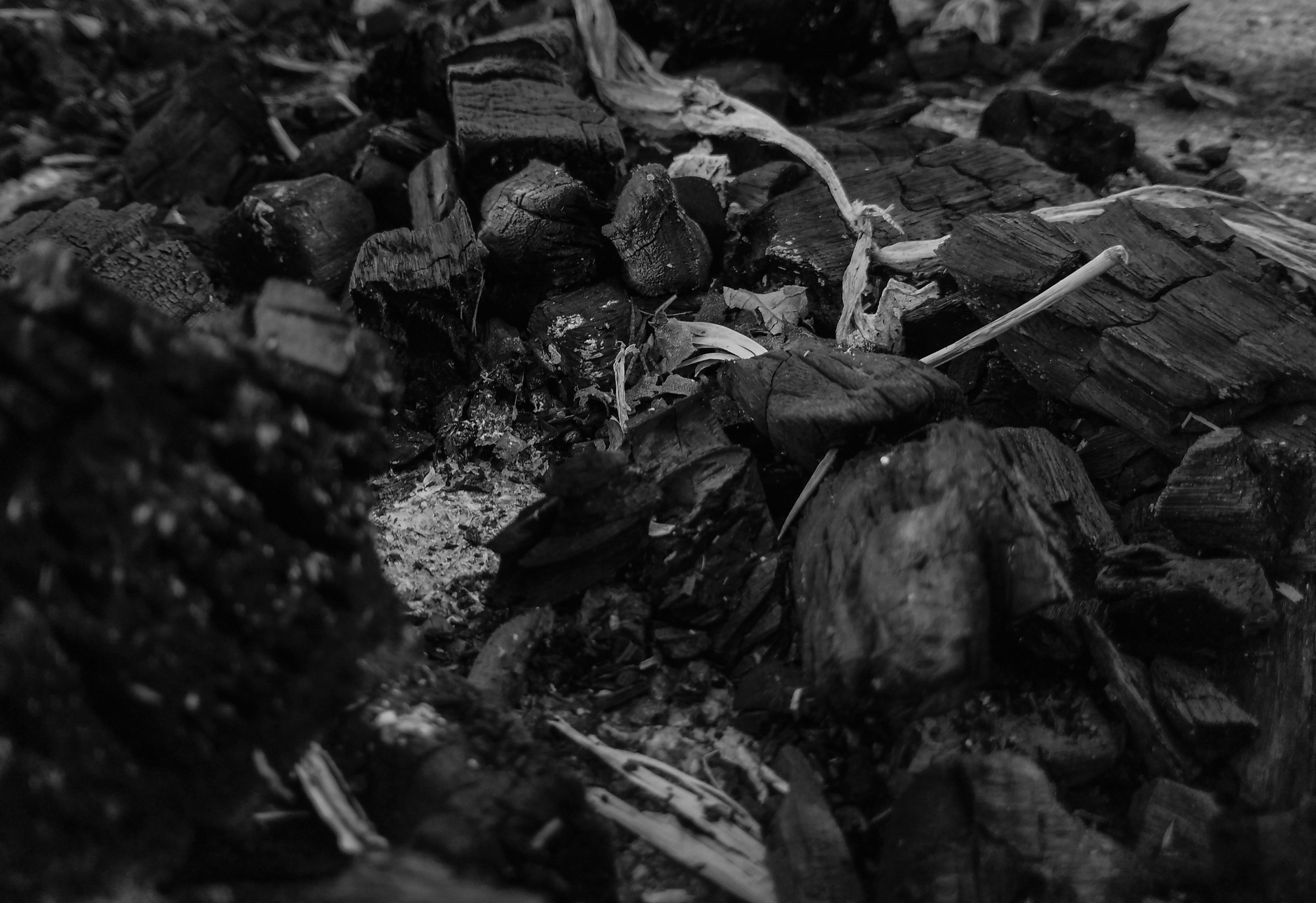
Here is the method we would use in a standard kettle.
First, light a chimney starter about one-quarter to one-third full. You do not want a raging fire. You want a small, reliable ember bed that you will feed slowly. Give the coals time to ash over properly before they go in. Lighting discipline matters, and we cover it in how to light lump charcoal; rushing this step is the most common reason a low and slow cook runs hot early.
Second, bank the lit coals against one wall of the grill. Add a handful of unlit lump on top of the lit bed. The unlit pieces will catch gradually and extend your burn, which is exactly what you want over four to six hours. This slow-feed approach, sometimes called a minion or snake layout, is what turns a short-burning fire into a long one.
Third, put a water pan on the empty side, under where the ribs will sit. The water does two jobs: it steadies the temperature by absorbing and releasing heat, and it keeps the chamber humid so the surface of the ribs does not dry out. A dry chamber gives you leathery bark. A humid one gives you a tender, set surface.
Fourth, set your vents. The bottom intake vent controls how much oxygen reaches the fire, which controls how hot it burns. The top exhaust vent should usually stay mostly open to let smoke and moisture move through. You regulate temperature mainly with the bottom vent. Open it wider for more heat, close it down to cool the fire. Make small adjustments and wait ten to fifteen minutes before judging the effect, because the fire responds slowly. Airflow is the lever that does the most work on a long cook, and lump charcoal grill airflow goes deeper into reading the vents.
Holding Temperature: The Long Middle
Once the grate settles between 110 and 135 degrees Celsius, your job changes from building a fire to defending a temperature. This is the part that separates a good rack from a mediocre one, and it is almost entirely about the fire, not the meat.
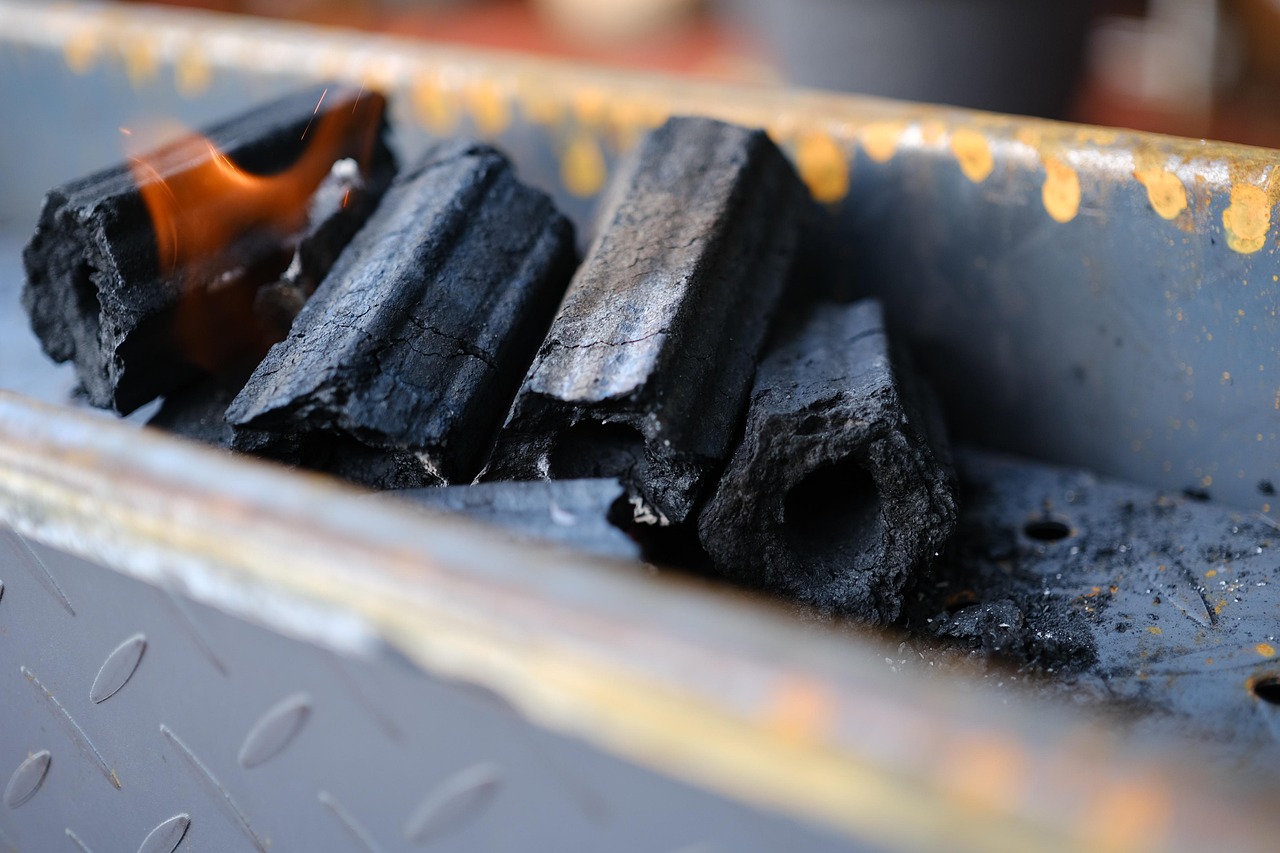
A stable fire comes from stable fuel and steady airflow. If you built the fire with consistent, dense lump and you set the vents carefully, the temperature should hold with only minor nudges. When it drifts up, close the bottom vent a touch. When it drifts down, open it. Resist the urge to lift the lid. Every time you open the grill you dump heat and moisture, and you add fifteen minutes to the cook while the chamber recovers. Look at the meat when you have a reason to, not out of nerves.
Feeding the fire is the one task that does demand attention. On a long cook you will need to add unlit charcoal once or twice to keep the ember bed alive. Add it before the fire fades, not after, because a dying bed is slow to recover and will drag your chamber temperature down for half an hour. Add a small amount of unlit lump at the edge of the burning zone and let it catch gradually. If you find yourself constantly fighting a fading fire, the fuel was probably too light or too damp to begin with, which brings the whole thing back to fuel quality.
Ash management belongs here too. As charcoal burns it leaves ash, and ash smothers airflow from below. If your fire is slowly losing heat despite an open vent and plenty of fuel, a choked ash bed is often the reason. A quick clearance of the lower vent restores the draw. This is where clean, high-carbon fuel earns its place, because it leaves far less ash than a filler-heavy briquette.
Timing And Doneness
Grilling ribs on charcoal runs roughly four to six hours depending on the cut and your target texture. Baby back ribs are leaner and quicker, often four to five hours. Spare ribs and St Louis cuts carry more fat and connective tissue, so they take longer, five to six hours, and reward the extra time with a richer result.
Do not cook ribs to a clock and do not cook them to a single internal temperature the way you would a steak. Collagen breakdown is about time at temperature, so the real tests are physical. The meat pulls back from the ends of the bones as it cooks, exposing the tips. A toothpick or probe slides into the meat between the bones with almost no resistance when the collagen has rendered. The rack bends and the surface cracks slightly when you lift it. Those signs tell you the connective tissue has done its work, which no thermometer reading on its own will confirm.
Wrapping is optional and depends on the result you want. Wrapping the ribs in foil partway through the cook traps moisture and speeds the tender-up, giving a softer, falling-off-the-bone texture. Leaving them unwrapped the whole way gives a firmer bite and a better bark. Neither is wrong. It is a texture choice, and your charcoal does not care either way as long as it holds temperature.
Rest the rack for ten to fifteen minutes after it comes off. The juices redistribute and the meat firms slightly, which makes it easier to slice cleanly between the bones.
What This Means If You Are Buying Fuel In Volume
If you run a restaurant, distribute to grill houses, or build a private-label brand, the home-cook version of this scales up with one extra concern: consistency bag to bag. A single good bag is luck. A pallet of bags that all burn the same way is manufacturing. That difference is the whole reason buyers come to a factory rather than a trading company, and it is covered plainly in charcoal factory versus trading company.
For a venue cooking ribs and other low and slow cuts daily, the fuel has to deliver the same burn time and the same stable temperature every service, or your kitchen cannot standardise its timings. We hold that consistency through grading, drying, and testing before anything ships, which is the quiet work behind quality control. If you are planning fuel volumes for a rib-heavy menu, charcoal for restaurants and volume planning shows how to estimate what you actually burn through in a week.
Private-label and OEM buyers have the same need plus one more: the fuel has to match the promise on the label. If your bag says natural hardwood lump suited to low and slow cooking, the charcoal inside has to burn that way for your customers, not just in a showroom. That is the product we build and specify for buyers who put their own name on it.
Everything above funnels to one page on our site. For the full range of fuels suited to this kind of cooking, how they are graded, and how to order them for export, start at our BBQ charcoal hub. It is the right entry point whether you are buying a few bags or a container.
Recap
Grilling ribs on charcoal is a stamina job, not a heat job. The fire has to hold a low, flat temperature between 110 and 135 degrees Celsius for four to six hours, and that comes down to three things:
- Fuel: dense, consistent, dry hardwood lump as the default, with binchotan for compact grills and clean briquettes as a managed option. Moisture and grading decide whether the fire holds.
- Setup: a two-zone indirect fire with a water pan, a small lit bed fed with unlit lump, and temperature controlled through the bottom vent.
- Timing: cook to feel, not to the clock, using bone pullback and probe resistance to judge doneness, then rest the rack before slicing.
Get the fuel right and the rest is patience. Get the fuel wrong and no technique recovers it.
If you are sourcing charcoal for ribs and other low and slow cooking, whether for your own kitchen, your shelves, or your own brand, the place to start is our BBQ charcoal hub at /bbq-charcoal.
Source it directly
BBQ Charcoal, factory direct.
Serious BBQ needs charcoal that holds temperature through a long cook without flooding the food in smoke. Our hardwood BBQ charcoal is built exactly for that.